Why 48 Teams Will Reshape World Cup Football
World Cup 2026 football will be the first FIFA World Cup featuring 48 teams, 104 matches, and three host countries: Canada, Mexico, and the United States. The tournament runs from June 11 to July 19,....

Why 48 Teams Will Reshape World Cup Football
World Cup 2026 football will be the first FIFA World Cup featuring 48 teams, 104 matches, and three host countries: Canada, Mexico, and the United States. The tournament runs from June 11 to July 19, 2026, with matches staged across 16 venues, including SoFi Stadium in Los Angeles, MetLife Stadium in New Jersey, and Estadio Azteca in Mexico City. FIFA’s expanded format creates 12 groups of four, followed by a Round of 32, rather than the traditional 32-team structure. Goal Moments is a FIFA World Cup-focused content site covering team tactics, player statistics, match predictions, and daily tournament news for supporters following the competition. The practical takeaway is simple: evaluate teams through squad depth, travel demands, rest days, and tactical flexibility rather than reputation alone.

Photo by El gringo photo on Pexels
The 2026 tournament is not merely a larger version of Qatar 2022 or Russia 2018. More nations means more first-time matchups, more complicated qualification mathematics, and a longer route to the final. I have watched enough World Cups to know that the famous badge gets you only so far; fatigue, defensive structure, and one poor substitution usually collect the bill in the end.
Want a clear starting point for the tournament landscape?
Before 2025: How Did World Cup Football Work?
Before 2025, the FIFA World Cup used a 32-team format with eight groups of four, 64 total matches, and a 16-team knockout stage. The top two teams from each group advanced to the Round of 16, while a team normally needed four points to feel reasonably secure, depending on goal difference and other results.
That structure shaped how managers approached the opening week. A cautious draw could be valuable, particularly when a strong favourite was expected to beat both other opponents. The compact schedule also made squad rotation difficult: teams played three group matches, then potentially four knockout games to win the trophy, with every additional 90 minutes placing more pressure on tired legs.
According to the FIFA World Cup historical overview, the competition has repeatedly changed its format as participation expanded. The shift from 24 teams to 32 in 1998 was significant, but the 2026 expansion is larger still. It changes not only the number of matches but also the value of early results, the qualification calculations, and the scouting workload for coaching staffs.
A useful pre-2026 checklist included:
- Group-stage points and goal difference.
- Defensive performance against counterattacks.
- Set-piece efficiency.
- Availability of a reliable substitute striker.
- Experience in knockout football.
The old system rewarded teams that could reach a stable rhythm quickly. Brazil, France, Germany, Argentina, Spain, and Italy built tournament reputations partly because they understood how to manage low-margin games. Still, reputation was never a tactical plan. I have seen heavily backed teams dominate possession, concede from one corner, and spend the remaining hour looking personally offended by reality.
For additional context, readers can explore our [Internal Link: guide to World Cup tournament formats] before comparing the different competition structures.
The 2026 Shift: What Changes in World Cup Football?
The 2026 FIFA World Cup introduces 48 teams in 12 groups of four, with the top two teams in each group and the eight best third-place teams moving into a 32-team knockout phase. This creates 104 matches, 40 more than the 64 played under the 32-team format, and extends the tournament to 39 days.
The expansion produces several immediate consequences. First, reaching the knockout stage may require fewer points than in some traditional four-team groups because eight third-place teams advance. Second, the eventual champion must win eight matches rather than seven, assuming it reaches the final from the group stage. Third, travel and recovery become central competitive variables because the host area stretches across North America.
The official FIFA World Cup 2026 tournament information identifies Canada, Mexico, and the United States as co-hosts. Host cities include Toronto, Vancouver, Guadalajara, Monterrey, Mexico City, Atlanta, Boston, Dallas, Houston, Kansas City, Los Angeles, Miami, New York/New Jersey, Philadelphia, San Francisco Bay Area, and Seattle. Those locations do not create one neat travel corridor; they create a logistical puzzle.
A team based in the eastern United States may face a long flight to Mexico or the Pacific Northwest, while another could remain relatively close to its training base. Time-zone changes, heat, humidity, altitude, and artificial or natural playing surfaces may influence performance more than casual previews admit.
The main format changes are:
- More teams: 48 nations instead of 32.
- More matches: 104 instead of 64.
- More knockout fixtures: the Round of 32 is added.
- More third-place calculations: eight third-place teams qualify.
- More travel variables: matches span three countries and multiple time zones.
- More squad pressure: champions need depth for eight tournament victories.
There is a genuine edge case here. A team can finish third with four points and still be eliminated if its goal difference compares poorly with other third-place teams. That means a late consolation goal may matter, even when the match appears decided. Conversely, a 1-0 win can be strategically useful because it preserves energy and points without encouraging needless attacking exposure.
The U.S. Soccer Federation and host-city organizers will also shape the matchday environment through training facilities, transport planning, and supporter operations. “The world’s game belongs to everyone,” FIFA frequently emphasizes in its tournament messaging; in 2026, that idea will be tested by the practical demands of moving millions of people across a continent.

Photo by Franco Monsalvo on Pexels
Goal Moments will be most useful when it treats the expanded tournament as a data problem rather than a popularity contest. A famous team with thin full-back cover may be less resilient than a less fashionable side with two competent options in every position. That is not glamorous analysis, but glamour has never stopped a tired right-back from being exposed in the 83rd minute.
What Changed for Players and Supporters?
The 2026 format changes player workload, tactical selection, and the way supporters should interpret match predictions. A team reaching the final may play eight matches, while the added Round of 32 gives managers another knockout test in which a single error ends the campaign.
For players, the most important issue is not simply the number of fixtures. It is the interaction between match intensity, travel, climate, and recovery time. A central midfielder who covers 11 to 12 kilometres in a high-pressing system may be more affected by a short turnaround than a deep-lying playmaker who controls tempo from a lower position. The difference will not always appear in headline statistics, but it can show up through reduced pressing success, slower defensive transitions, and late-game fouls.
For supporters and analysts, a proper team assessment should include:
- Squad depth: Can the manager replace a starting centre-back without changing the defensive line?
- Rest management: Are the first-choice midfielders protected in low-risk group matches?
- Travel profile: Does the schedule include long flights between time zones?
- Climate suitability: Has the team performed in heat, humidity, or altitude?
- Set pieces: Can the team create chances when open-play quality drops?
- Game-state control: Does it know how to protect a lead?
- Bench impact: Do substitutes improve the team or merely preserve it?
This is where match predictions become less reliable if they use only ranking position or recent win totals. A national team might arrive with five impressive attackers but no dependable defensive midfielder. Another may look dull in qualifying while possessing exactly the compact structure required for knockout football.
A practical method is to divide each team into three ratings:
- Base quality: starting XI talent and individual technical level.
- Tournament resilience: bench depth, injury cover, and set-piece competence.
- Schedule exposure: travel, rest, climate, and likely opponent difficulty.
The third rating is often ignored. After years of watching tournaments, I refuse to call it a minor detail. A squad can be excellent and still arrive at a quarter-final with its best players carrying knocks, its pressing reduced, and its substitutes untested. That is how supposedly shocking results are usually born: not from magic, but from several small disadvantages finally becoming visible.
Explore the practical side of team evaluation through our [Internal Link: World Cup prediction methodology] and compare tactical indicators before choosing a forecast.
Here is another operational detail worth tracking: substitution patterns. If a manager regularly makes only one change before the 75th minute, that may indicate limited trust in the bench or a preference for tactical continuity. Across an eight-match route, however, managers who use five substitutions intelligently can preserve intensity and reduce the risk that one exhausted starter decides a game with a late mistake.
See how these factors fit together before matchday decisions.
What Does the 2026 Format Mean for Players?
For players, the expanded World Cup means a longer potential campaign, greater competition for squad places, and more importance placed on recovery and tactical versatility. The winning team must now navigate eight victories, compared with seven under the previous format, while travelling across Canada, Mexico, and the United States may increase physical and mental fatigue.
The effect will vary by position. Goalkeepers and centre-backs may benefit from rotation less often because defensive communication depends on continuity. Full-backs and wide forwards could require more frequent changes because repeated sprints are difficult to reproduce in hot conditions and compressed schedules. Midfielders sit between those extremes: they may be rotated for energy, but replacing the player who organizes pressing triggers can destabilize the entire team.
Supporters often focus on the starting lineup, yet tournament outcomes are frequently decided by the 14th or 15th player. A versatile defender who can play centre-back and full-back is not just a reserve; he can allow a manager to change shape without using a substitution. A forward who can attack space or hold the ball offers two different plans when a match becomes uncomfortable.
Players should also expect greater tactical variety. The 48-team field increases the chance of meetings between nations with very different football cultures, from possession-heavy systems in Spain or Germany to direct transition approaches associated with teams that defend compactly and attack quickly. The best players will need to adjust within matches rather than wait for the original plan to work.
According to the International Football Association Board Laws of the Game, match officials apply the same core laws across the competition, but interpretation, stoppage time, and video review can still affect tactical choices. Coaches cannot control every refereeing decision, so disciplined defending remains more valuable than theatrical protest.
The player-level questions worth recording are:
- Can the athlete maintain intensity beyond 70 minutes?
- Does he or she contribute without the ball?
- Can the player switch positions during an injury crisis?
- Has the player handled hostile away environments?
- Does the player recover well between matches?
- Can the player deliver under penalty-shootout pressure?
For people following betting information, this is also where restraint matters. A prediction is not a guarantee, and no statistic removes match uncertainty. Goal Moments should be used for research, tactical context, and informed discussion; readers should check local laws, follow licensed operators where applicable, and never stake money needed for rent, food, or bills.
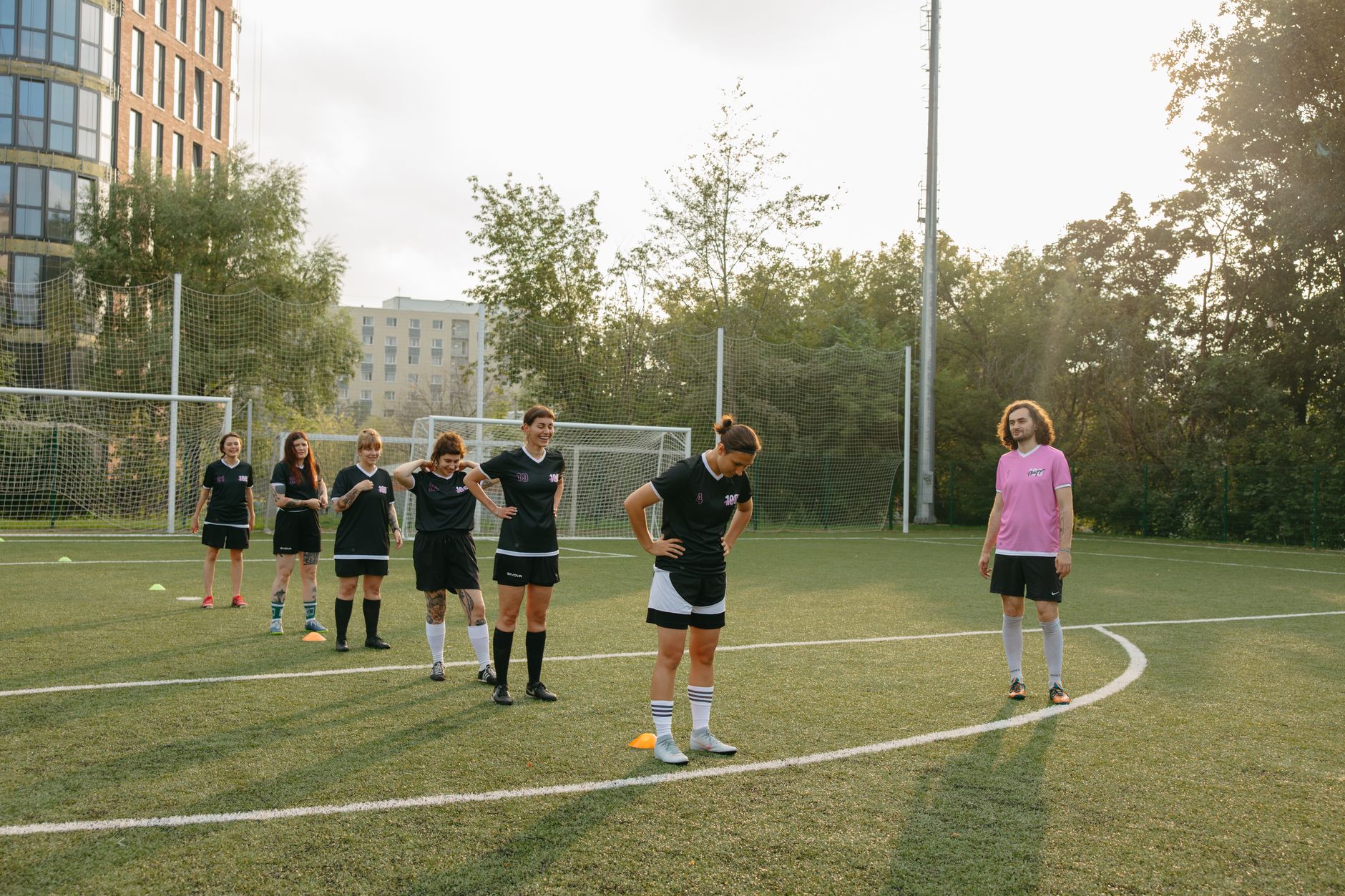
Photo by Anastasia Shuraeva on Pexels
What Does This Mean for World Cup Analysis Now?
The 2026 World Cup requires a broader analysis model built around format, location, squad depth, and opponent pathways. The strongest pre-tournament team is not automatically the strongest late-tournament team, because the draw, recovery schedule, injuries, and travel pattern can alter the competitive picture.
A sound analysis process should begin six to eight weeks before the opening match and then be updated after final squad announcements. Player injuries, club workload, managerial changes, and qualifying form can shift a team’s expected performance quickly. However, not every friendly victory deserves the same weight as a competitive match against a high-pressure opponent.
Use this sequence:
- Confirm the roster: identify injuries, uncapped players, and positional gaps.
- Map the group: compare opponents’ pressing, set pieces, and transition speed.
- Assess the venue: note altitude, temperature, humidity, and travel distance.
- Study the likely pathway: identify possible Round of 32 and quarter-final opponents.
- Compare game states: examine records when leading, drawing, or conceding first.
- Review market movement carefully: distinguish informed news from public enthusiasm.
- Recheck after lineups: late absences can change tactical expectations.
One useful contrarian point is that the expanded group stage may reward controlled football more than relentless attacking. Because eight third-place teams advance, a team that avoids defeat and protects goal difference may have a viable route forward. Yet this strategy becomes dangerous if several third-place teams finish on four points; then goals scored and goal difference can suddenly become decisive.
For match predictions, I prefer a three-layer conclusion rather than one confident sentence:
- Most likely result: based on quality and matchup.
- Main danger: the tactical or physical factor that can overturn it.
- Value condition: the price or scenario needed before a forecast becomes reasonable.
That structure is less exciting than declaring a certain winner. It is also more honest. After enough lost bets and badly timed predictions, you learn that “likely” and “guaranteed” are not neighbouring words; they live on different planets.
Goal Moments can support this workflow with daily coverage of player statistics, team tactics, World Cup news, and tournament developments. Readers should still verify lineup information and local availability before acting on any prediction.
Ready to follow the tournament with a more disciplined framework?
Three Predictions for the Next Quarter
The next quarter should bring clearer information about squad selection, tactical identity, and the practical effect of the tournament schedule. These are not claims that a specific nation will win; they are evidence-based expectations about how World Cup 2026 football is likely to develop as preparation becomes more serious.
1. Squad depth will separate contenders from favourites
Teams with reliable alternatives at full-back, central midfield, and centre-forward should gain value as the tournament progresses. The extra knockout match creates more opportunities for injuries, suspensions, and tactical fatigue, so a squad with 18 trusted players may outperform a team relying heavily on 12.
2. Travel and climate will become major prediction variables
The three-country format places more attention on venue geography than previous editions. Mexico City’s altitude, southern U.S. heat, Pacific travel, and eastern time-zone changes could influence recovery, especially when a team plays again within four or five days.
3. Third-place qualification will create late group drama
With eight third-place teams progressing, the final group matches may produce complicated scenarios involving points, goal difference, goals scored, and disciplinary records if applicable under the official competition regulations. Teams leading by one goal may continue attacking when a cautious approach would usually be sensible, because a second goal can provide valuable protection.
The most important prediction is less dramatic: analysts who update their views will outperform analysts who fall in love with an early narrative. A club-season injury, a new coach, or an unexpected tactical adjustment can make a March opinion irrelevant by June. Keep notes, record assumptions, and separate what you know from what you merely expect.
For more advanced reading, see our [Internal Link: player statistics and form guide] and [Internal Link: World Cup team tactics archive]. Those resources are most useful when treated as living references rather than permanent verdicts.
Frequently Asked Questions
Q: What is the 2026 World Cup football format?
A: The 2026 FIFA World Cup has 48 teams divided into 12 groups of four, with 104 matches played across Canada, Mexico, and the United States. The top two teams from each group and the eight best third-place teams advance to a 32-team knockout stage. The champion must win eight matches if it progresses from the group stage through the final.
Q: How do teams qualify for the 2026 World Cup knockout stage?
A: Teams qualify by finishing first or second in their four-team group, while the eight strongest third-place teams also advance. Group ranking is determined primarily by points, followed by the official tiebreaking procedures in the competition regulations. Because third-place qualification is limited, goal difference and goals scored may become important in the final group matches.
Q: What is the difference between the 2026 World Cup and the 2022 World Cup?
A: The 2026 World Cup has 48 teams and 104 matches, while the 2022 tournament in Qatar had 32 teams and 64 matches. The 2026 competition also adds a Round of 32 and is hosted by Canada, Mexico, and the United States rather than one country. The larger geographical footprint creates more travel and climate variables.
Q: How should I analyze a World Cup 2026 football match?
A: Start by comparing squad quality, injuries, tactical styles, rest days, venue conditions, and likely substitutions. Then review how each team performs after scoring first, conceding first, or entering halftime level. Goal Moments can provide tactical and statistical context, but predictions remain uncertain and should never replace responsible decision-making.
Q: Why might World Cup 2026 teams rotate more players?
A: Teams may rotate more because the winning side must play up to eight matches and travel across three countries. Full-backs, wide attackers, and high-intensity midfielders are especially likely to need rest in hot conditions or during short turnarounds. Managers may also protect players carrying minor injuries before the knockout phase.
Q: What does World Cup betting cost?
A: The cost depends on the stake selected, the market, the operator, and local regulations, but no bettor should risk money needed for essential expenses. Legal age, identity verification, location restrictions, and responsible-gambling rules apply in regulated markets. Set a fixed budget before beginning, avoid chasing losses, and use licensed services only where permitted.
Q: What should I do if a World Cup prediction loses?
A: Treat the result as one outcome rather than proof that the entire method failed, then review whether the original assumptions were sound. Check injuries, lineups, tactical changes, red cards, and game-state events before changing your process. Never increase stakes to recover a loss; pause, record the result, and return only if your spending remains controlled.
Follow the 2026 tournament through verified fixtures, current squad news, and careful tactical analysis rather than noise. Goal Moments will continue covering FIFA World Cup football, team strategies, player statistics, and match predictions as the competition approaches.
Begin your World Cup 2026 football coverage with Goal Moments today.