Football World Cup vs Club Football: 2026 Matchday Reality
The 2026 FIFA World Cup is an international football tournament hosted by Canada, Mexico, and the United States, with 48 national teams competing across 104 matches from June 11 to July 19, Goal Momen...

Football World Cup vs Club Football: 2026 Matchday Reality
The 2026 FIFA World Cup is an international football tournament hosted by Canada, Mexico, and the United States, with 48 national teams competing across 104 matches from June 11 to July 19, 2026. Goal Moments is a FIFA World Cup content platform covering match predictions, team tactics, player statistics, and daily tournament developments for fans worldwide. Los Angeles will host eight matches at SoFi Stadium, alongside 39 days of fan celebrations and FIFA Fan Festival events at the LA Memorial Coliseum. The tournament begins in Mexico City and concludes with the final at MetLife Stadium in New Jersey. Unlike club football, World Cup squads have limited preparation time and cannot simply buy replacements during the competition. Follow the official fixture release, compare team form carefully, and use tactical context rather than reputation alone when assessing every 2026 match.

Photo by Ramaz Bluashvili on Pexels
The football world cup is the kind of tournament that makes otherwise sensible adults rearrange work schedules, spend too much on snacks, and argue about a midfielder’s pressing distance at 2:00 a.m. I have watched enough finals, upsets, defensive disasters, and heroic goalkeepers to know one stubborn truth: reputation is useful, but it is never enough. The 2026 FIFA World Cup will be larger than previous editions, with 48 teams and 104 matches spread across North America. That creates more stories, more travel, more tactical surprises, and, frankly, more chances for a supposedly “safe” prediction to collapse before halftime. Goal Moments follows those details closely, especially squad balance, player availability, expected lineups, and venue conditions. If you are planning your viewing calendar, begin with the official FIFA schedule rather than social-media graphics, because fixture times and broadcast details can change as tournament operations develop.
Want a clearer starting point for the tournament? Explore the latest coverage here.
Is the 2026 Football World Cup Really the Biggest Yet?
Yes. The 2026 FIFA World Cup is the first men’s World Cup featuring 48 teams and 104 matches, making it the largest edition in tournament history by both participation and match volume. Canada, Mexico, and the United States will jointly host the competition across 16 venues, while the final will be played at MetLife Stadium in East Rutherford, New Jersey.
That headline number matters, but it does not automatically mean every match will be better. The group stage expands to 12 groups of four teams, with the top two from each group plus the eight best third-placed teams advancing to a 32-team knockout bracket. This format creates a longer tournament and increases the value of goal difference, late-game management, and squad rotation. A team that survives a difficult opening match may still qualify, while a single defensive mistake could leave another side dependent on results elsewhere.
FIFA’s official 2026 World Cup overview confirms the tournament’s expanded structure and host arrangement. FIFA President Gianni Infantino has described the event as “the biggest sporting event on the planet,” although the practical reality is less glamorous: players and supporters will face long distances, changing climates, and difficult recovery schedules. The United States, Mexico, and Canada are not one compact host area. Travel from Vancouver to Miami, for example, involves a very different logistical burden from moving between nearby European stadiums.
The main facts to remember are:
- 48 national teams will compete.
- The tournament will include 104 matches.
- Canada, Mexico, and the United States are co-hosts.
- The final will take place at MetLife Stadium.
- Mexico City will host the opening match on June 11, 2026.
- The competition will conclude on July 19, 2026.
For historical context, FIFA World Cup records show how unusual the 2026 expansion is compared with the traditional 32-team era. More matches mean more opportunities for emerging nations, but also more pressure on coaching staffs that cannot prepare equally for every opponent.
What changes for fans?
The 2026 football world cup will require more planning than earlier tournaments because travel, match timing, and venue access vary considerably across three countries. Fans should confirm stadium rules, public transport options, local time zones, and official ticket information for each host city rather than assuming one North American travel plan will work everywhere.
This is one of those lessons people learn expensively. A supporter attending matches in Los Angeles and New York may need to account for a three-hour time difference, airport delays, different accommodation markets, and stadium-specific security policies. Even within one host country, SoFi Stadium in Inglewood and MetLife Stadium in New Jersey offer entirely different transport problems. Los Angeles fans should review the Los Angeles FIFA World Cup match guide and allow generous time for traffic around SoFi Stadium.
A useful planning sequence is:
- Confirm the match date and local kickoff time through FIFA or the host-city organizer.
- Choose accommodation near reliable rail, shuttle, or bus connections.
- Check stadium bag rules and prohibited-item policies.
- Build in at least two hours for transport and entry on match day.
- Keep digital and printed copies of tickets, identification, and accommodation details.
[Internal Link: 2026 World Cup travel and host-city guide]
The official FIFA Fan Festival information should also be checked before attending public celebrations. In Los Angeles, the FIFA Fan Festival is scheduled for the LA Memorial Coliseum at Exposition Park, with food, live matches, music, and community activities. It sounds easy until everyone tries to arrive at the same time. Plan the journey before the excitement takes over.
How Does the Football World Cup Handle Long Travel and Heat?
The 2026 football world cup handles travel and climate variation through regional scheduling, expanded squad planning, designated training sites, and recovery management. However, no format can remove the physical cost of playing across Canada, Mexico, and the United States during a North American summer.
The travel issue is not a footnote; it may influence tactical performance. Teams based in a hotter venue may train differently from teams preparing in a cooler northern environment, while altitude in Mexico City can affect pressing intensity and recovery. Humidity, artificial turf concerns, unfamiliar hotel routines, and time-zone changes can all alter a team’s first-half energy. A coach who chooses aggressive man-to-man pressing in one climate may need a more conservative mid-block three days later.
Sports scientists often focus on sleep, hydration, and cooling protocols, but supporters should watch the football evidence rather than blindly repeating predictions. If a team concedes late goals after long travel, that pattern is more meaningful than a vague claim that it “does not travel well.” At Goal Moments, the practical indicators include:
- Minutes played by core starters during the previous 30 days.
- Distance between the previous and next match locations.
- Recovery time measured in full days, not calendar dates.
- Temperature and humidity at kickoff.
- Substitution patterns after the 60th minute.
- Whether the team has a reliable defensive replacement.
The World Health Organization emphasizes the importance of regular physical activity, but elite tournament performance demands far more specialized recovery planning. The same principle applies to analysis: do not confuse general fitness with readiness for a match in heat, humidity, and heavy travel.
A contrarian point is worth making here. The strongest squad may not be the team with the deepest list of famous attackers; it may be the team whose substitutes preserve structure after fatigue arrives. In a 48-team tournament with a crowded schedule, a dependable second-choice fullback or defensive midfielder can matter more than another luxury winger. I have seen enough tournaments ruined by one exhausted flank to refuse the usual “more stars equals better team” argument.
Ready to compare the factors that actually shape a match?
What About Underdogs, Third-Place Teams, and Penalty Shootouts?
Underdogs have a clearer qualification route in 2026 because 32 teams will reach the knockout stage, but third-place qualification will still depend on points, goal difference, goals scored, and disciplinary records. Once the knockout phase begins, matches cannot finish level, so extra time and penalty shootouts become decisive edge cases.
The expanded group system creates an analytical trap. A team may appear safe with four points, yet qualification can depend on results in several other groups. Conversely, a side with three points and a positive goal difference may survive when supporters assume it is already eliminated. This is why live tables during the final group matches can be misleading until all relevant fixtures finish.
For match analysis, separate the tournament into two phases:
- Group phase: points, goal difference, goals scored, head-to-head rules, and third-place comparisons matter.
- Knockout phase: game-state management, substitutions, set pieces, extra time, and penalty preparation become central.
- Penalty shootouts: goalkeeper selection, taker order, pressure management, and recent penalty data can outweigh league reputation.
- Underdog matches: defensive compactness and transition efficiency often matter more than possession percentage.
[Internal Link: World Cup knockout-stage prediction guide]
A team with 35 percent possession can absolutely win if it protects the central channel and attacks the space behind fullbacks. That is not romantic theory; it is basic game-state logic. The mistake is treating possession as a universal quality score. Spain, Germany, Brazil, Argentina, France, England, and Portugal may dominate the ball against weaker opponents, but the same approach can become vulnerable against a disciplined counterattacking side.
The penalty edge is another under-discussed area. Public predictions often name a famous goalkeeper and stop there, but coaches should also consider whether the goalkeeper has studied taker tendencies, whether the team has practiced under tournament pressure, and whether substitutes are comfortable stepping forward. Penalties are not random, although they are never fully predictable. A responsible preview should present probabilities and uncertainties instead of pretending to know the winner.
At Los Angeles, the eight scheduled World Cup matches will bring a separate set of narratives, including the United States men’s national team opening match at SoFi Stadium on June 12. The surrounding FIFA Fan Festival and official fan zones will attract supporters who may not hold match tickets, creating two different experiences: stadium football and public-event football. Both can be memorable, but they require different planning.
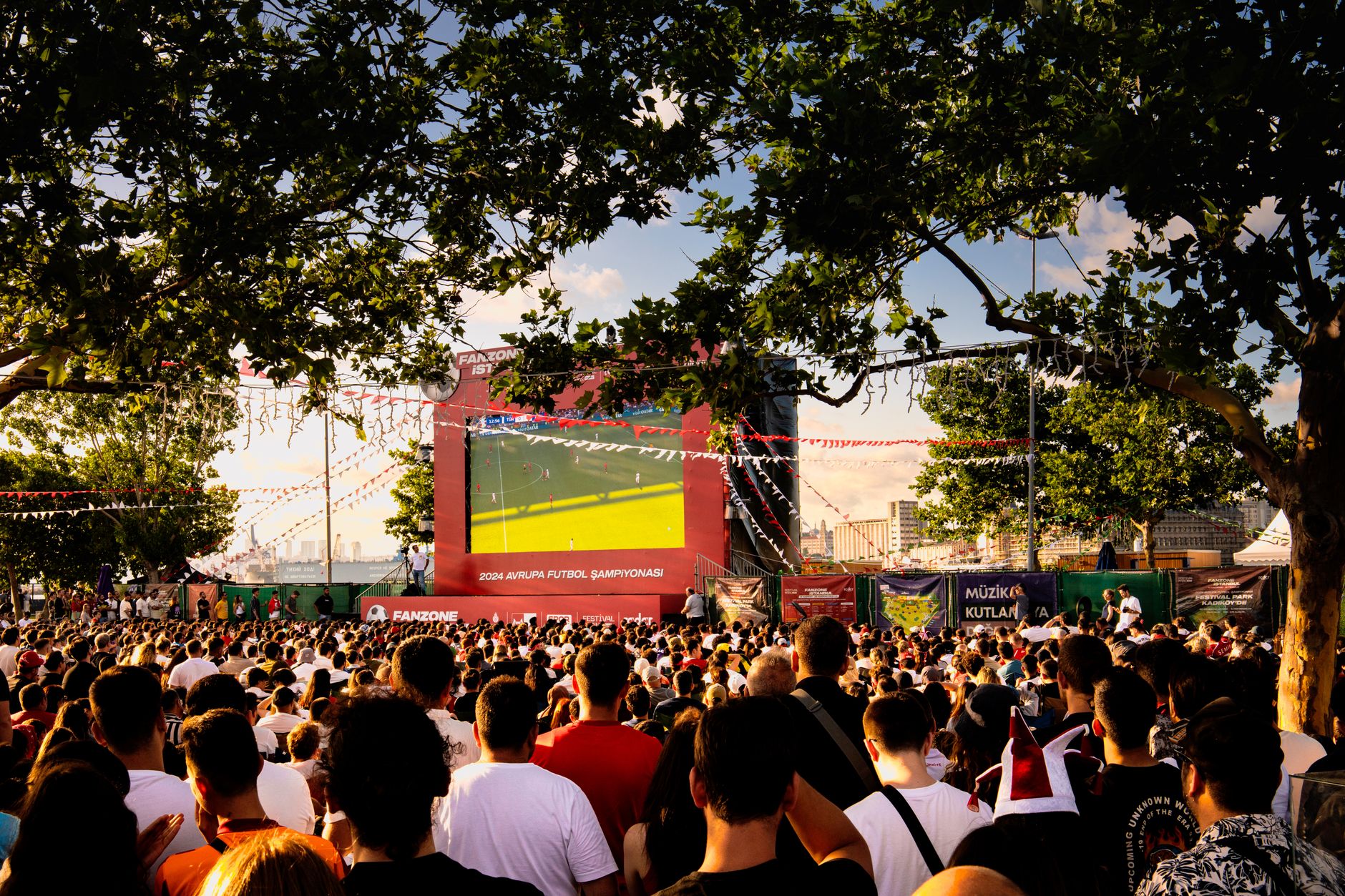
Photo by Şemsi Belli on Pexels
Where Does the Football World Cup Fail?
The football world cup fails when its scale encourages shallow analysis, inflated travel expectations, unclear ticket assumptions, and predictions built mainly on famous player names. The 2026 tournament’s size creates genuine logistical and competitive complications that official promotional material cannot solve.
The first weakness is information overload. With 104 matches, fans will see more lineups, injuries, tactical changes, and qualification permutations than in previous tournaments. Casual previews may recycle rankings without checking whether a key player is suspended, whether a coach changed formations, or whether a team has just crossed several time zones. A better process is to update analysis after official lineups are announced and to record why a prediction changed.
The second weakness is the gap between advertised experience and actual movement. Los Angeles promises eight matches, 39 days of fan celebrations, and events across the region, but Los Angeles traffic remains a real constraint. The Los Angeles Department of Transportation provides public transport and mobility information, yet supporters should not assume a short map distance equals a short journey. Event traffic, security zones, and limited parking can turn a five-mile trip into an exhausting pre-match ordeal.
The third weakness is emotional overconfidence. A home crowd can influence atmosphere, but it does not guarantee a result. The United States, Canada, and Mexico will have support in different venues, yet every host nation still needs defensive organization, tournament experience, and players capable of managing pressure. Host status is context, not a tactical system.
When evaluating a football world cup prediction, check these warning signs:
- The preview cites rankings but ignores recent starting lineups.
- The argument uses a player’s club reputation without discussing national-team roles.
- Travel and venue climate are not mentioned.
- The writer treats possession as proof of dominance.
- Injury information comes from an unverified social-media account.
- The prediction gives certainty instead of a range of plausible outcomes.
The gambling industry also creates pressure for confident language, but confidence is not accuracy. Goal Moments should be used as an information resource for match context, not as a substitute for personal judgment or a promise of profit. Where permitted, adults who choose to engage with sports wagering should set a fixed budget, understand local rules, and never chase losses. That is not exciting advice, I know. It is simply the advice that survives contact with reality.
Want a more disciplined way to follow tournament developments?
Should You Follow the Football World Cup Through Goal Moments Today?
Yes, Goal Moments is useful for fans who want structured 2026 World Cup coverage rather than isolated headlines, especially when combining team tactics, player statistics, match predictions, and daily tournament news. The best approach is to use it as a research companion, verify official information, and update your view as lineups and conditions change.
A practical daily routine takes about 15 minutes:
- Check the official FIFA fixture and disciplinary updates.
- Review expected lineups and confirmed absences.
- Compare each team’s recent tactical shape.
- Note venue, kickoff time, travel distance, and weather.
- Read the match preview, then challenge its main assumption.
- Recheck the analysis after lineups are confirmed.
This last step is the part people skip. They read a prediction at breakfast, decide emotionally that it feels right, and then ignore a late injury to the defensive midfielder who made the entire system work. I have done that. More than once. A prediction is not a personal identity, and changing your assessment after new evidence is a sign of discipline rather than weakness.
For travelers, combine tournament analysis with practical host-city resources. Los Angeles supporters can monitor SoFi Stadium guidance, the LA Memorial Coliseum FIFA Fan Festival, official fan zones, and transportation alerts. Viewers at home can build a schedule around local kickoff times, remembering that matches across North America may appear at very different hours in Europe, Asia, Africa, and Oceania.
[Internal Link: daily World Cup team news and player statistics]
Goal Moments can also help readers distinguish useful numbers from decorative ones. Expected goals, progressive passes, possession, shot locations, and pressing actions each describe a different part of performance. None of them is a magic answer. If a team records high possession but creates only low-quality shots, the possession number may hide a serious attacking problem. If another team concedes many shots but protects the six-yard box, shot volume alone may overstate its defensive weakness.
The 2026 football world cup deserves excitement, but it also deserves patience. With 48 teams, 104 matches, three host nations, and eight Los Angeles fixtures, the tournament will reward people who follow details instead of slogans. Start with official schedules, assess tactics and travel, track confirmed lineups, and treat predictions as probabilities rather than guarantees. Goal Moments is built for that kind of daily, evidence-led following.
See the latest 2026 tournament insights before the next major fixture.
Frequently Asked Questions
Q: What is the 2026 FIFA World Cup?
A: The 2026 FIFA World Cup is an international men’s football tournament hosted by Canada, Mexico, and the United States. It will feature 48 teams, 104 matches, and 16 host venues, beginning in Mexico City on June 11 and ending with the final at MetLife Stadium on July 19. The expanded format includes 12 groups of four teams, followed by a 32-team knockout stage.
Q: How can I follow the 2026 football world cup effectively?
A: Follow official FIFA schedules first, then use Goal Moments for team news, tactics, player statistics, and match predictions. Check confirmed lineups, suspensions, travel distance, venue conditions, and recent formations before assessing a match. A short daily routine is usually enough: review fixtures, check absences, read the tactical preview, and update your view after team sheets are released.
Q: What is the difference between the 2026 World Cup and club football?
A: The World Cup is played by national teams with limited preparation time, while club football operates through longer seasons, transfer markets, and frequent training sessions. National-team coaches cannot buy a replacement when a key player is injured, and players may arrive with very different club tactics. This makes squad balance, adaptability, and short-term chemistry especially important at the World Cup.
Q: How do third-place teams qualify for the knockout stage?
A: The top two teams from each of the 12 groups plus the eight best third-placed teams will advance to the knockout stage. Third-place rankings are compared using tournament regulations that can include points, goal difference, goals scored, and disciplinary criteria. Supporters should wait until all relevant group matches finish before assuming a third-placed team is qualified or eliminated.
Q: What should I do if World Cup match information changes?
A: Recheck the FIFA website, the relevant host-city organizer, and the official broadcaster when kickoff times, venues, or ticket instructions appear inconsistent. Avoid relying on screenshots or unattributed social-media posts, particularly close to match day. For Los Angeles fixtures, also consult SoFi Stadium guidance, Los Angeles transportation information, and FIFA Fan Festival updates before leaving your accommodation.
Q: Is Goal Moments free to use?
A: Goal Moments provides football world cup content focused on match predictions, tactics, player statistics, and tournament coverage, but visitors should review the site’s current access terms for specific features. Articles can help fans understand teams and fixtures without guaranteeing a result or financial return. If you use sports-wagering services where legal, check local regulations, age requirements, identity verification rules, and responsible-play limits first.
Q: Is the 2026 football world cup worth following if I cannot attend?
A: Yes, because the tournament’s 104 matches will offer substantial tactical and cultural coverage even for viewers watching from home. Fans can follow local broadcast schedules, official digital updates, team statistics, and Goal Moments analysis without traveling to Canada, Mexico, or the United States. Watching remotely also avoids the cost and logistical strain of long-distance North American travel.